
How to Choose the Right Activities for Your Bali Retreat

The activities you include in your retreat itinerary do more than fill time between sessions. At their best, they deepen the themes of your program, create shared memories that bond your group, and give guests access to experiences they couldn't easily find on their own.
At their worst, they add cost and logistical complexity without meaningfully adding to the experience — or worse, they pull energy away from the core work your retreat is designed to do.
Choosing well comes down to understanding what each activity actually offers, how it fits your retreat's specific themes and pace, and what your guests genuinely need at each point in the program.
Here's a practical guide to Bali's most popular retreat activities — what they offer, who they work for, and how to use them well.
Start With Your Retreat's Core Theme
Before choosing any activity, be clear on what your retreat is fundamentally about.
A breathwork and nervous system retreat has different activity needs from a creative leadership program, which has different needs from a yoga immersion, which has different needs from a women's wellness journey. The supporting activities should amplify the core theme — not just be a generic "best of Bali" checklist attached to whatever program you happen to be running.
Ask yourself for each activity you consider: Does this deepen what we're already doing, or does it distract from it?
If you can't give a clear answer, the activity probably doesn't belong in this particular retreat.
Cultural and Spiritual Experiences
Balinese Water Purification Ceremony (Melukat)
One of the most consistently meaningful experiences available in Bali — and one of the most commonly included in retreat itineraries, for good reason.
The Melukat is a traditional Balinese Hindu purification ritual performed at a water temple. Guided by a local priest or healer, participants move through a series of sacred spring water sources as part of a cleansing and blessing ceremony. The experience is deeply sensory, culturally rich, and emotionally resonant in a way that photographs cannot fully capture.
Best fit for: Retreats focused on healing, letting go, new beginnings, mindfulness, or spiritual growth. Works particularly well at the beginning or end of a retreat as a ritual opening or closing.
Practical note: Requires appropriate dress (sarongs provided at most temples) and respectful framing. This is a living spiritual practice, not a performance — the way you introduce it to your group matters.
Temple Visits
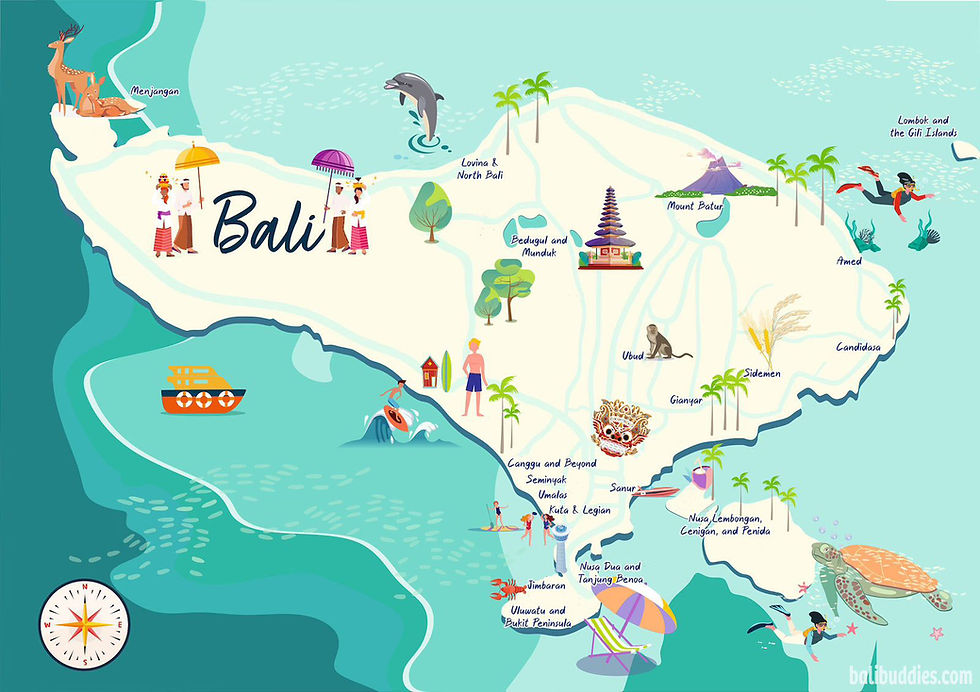
Bali's temple landscape is extraordinary — from the famous Pura Ulun Danu Bratan on the mountain lake to the soaring sea temple at Tanah Lot to the intricate stone carvings of Goa Gajah. Guided visits with a knowledgeable local guide provide cultural context that transforms a sightseeing trip into genuine understanding.
Best fit for: Almost any retreat format as a half-day addition. Particularly effective when paired with a reflective journaling or sharing session afterward.
Practical note: Major tourist temples can be crowded, particularly at peak times. Your retreat planner can advise on timing and alternative sites that offer the same cultural depth with fewer crowds.
Balinese Cooking Class
A hands-on introduction to Balinese cuisine — typically starting with a morning market visit, followed by preparation of traditional dishes using local ingredients, and ending with a shared meal of everything the group has made together.
Best fit for: Any retreat where community building, playfulness, and connection are part of the program. Works particularly well mid-retreat when the group has formed enough to enjoy a more social, collaborative experience.
Practical note: This is one of the more universally enjoyed activities across different retreat types — it's light, engaging, and produces an immediate, tangible result (a delicious meal) that guests consistently remember.
Nature and Landscape Experiences
Rice Terrace Exploration
Bali's terraced rice fields — particularly around Tegallalang, Jatiluwih, and Sidemen — are genuinely stunning and offer a window into the island's agricultural and spiritual relationship with the land. A guided walk through working rice terraces, with context on the subak irrigation system (a UNESCO World Heritage cultural landscape), connects guests to Bali's living heritage in a way a quick Instagram stop cannot.
Best fit for: Retreats with a nature, grounding, or mindfulness focus. Works well as a morning activity that sets a contemplative tone.
Practical note: Tegallalang is the most visited and consequently the most touristy. For a more authentic experience, your retreat planner can identify terrace routes with fewer crowds and more genuine landscape immersion.
Waterfall Visits
Bali has exceptional waterfalls — Sekumpul in the north, Gitgit, Nungnung, and others — that offer a combination of physical activity (reaching them often requires a trek) and natural spectacle.
Best fit for: Retreats with an adventure, nature, or energising element. Works well for groups that want a physical counterpoint to more inward or meditative program elements.
Practical note: Waterfall visits involve meaningful walking — assess your group's physical ability and enthusiasm for trekking before including these. Some waterfalls require significant descent and ascent that may not suit all participants.
Sunrise at Mount Batur
An early morning hike up Bali's active volcano for a sunrise view over the caldera and surrounding lakes. A physically demanding but genuinely spectacular experience that creates a strong shared memory for groups willing to commit to the early start and the climb.
Best fit for: Retreats with an adventure, challenge, or personal breakthrough theme. Particularly powerful for groups where pushing edges and celebrating collective achievement is part of the program's intention.
Practical note: Requires a 2am departure from most Ubud-area venues. Not suitable for all fitness levels — be honest with your group about what's involved before including this as a group activity.
Wellness Experiences
Balinese Massage and Spa
The Balinese massage tradition — a full-body combination of stretching, acupressure, and rhythmic kneading — is one of the most authentic and accessible wellness experiences on the island. A group spa afternoon or individual treatment session is a natural fit for most retreat formats.
Best fit for: Almost any retreat as a rest and integration experience, particularly on days following more intense program elements.
Practical note: Group spa sessions require coordination — not all venues have enough treatment capacity for a full group simultaneously. Your retreat planner can source quality spa providers who can accommodate group bookings.
Sound Healing
Gong baths, singing bowl sessions, and other sound healing modalities have become increasingly well-regarded as tools for nervous system regulation and deep relaxation. Bali has a strong community of experienced sound healers, many of whom can come to your venue rather than requiring your group to travel.
Best fit for: Retreats focused on stress, healing, nervous system work, or emotional processing. Works exceptionally well as an evening session following a full day of programming.
Traditional Healing (Balian)
A session with a Balian — a traditional Balinese healer — offers an experience that is genuinely unique to Bali. It can involve energy work, traditional plant medicine, spiritual consultation, or a combination. This is not a mainstream wellness service; it's a genuine encounter with a living healing tradition.
Best fit for: Smaller groups on spiritually focused retreats whose participants are genuinely open to this kind of experience. Requires careful, respectful framing and the right relationship with the right practitioner — this is not something to source casually.
Creative and Artisan Experiences
Batik or Weaving Workshops
Hands-on introduction to traditional Balinese textile crafts, usually led by local artisans. Creates a tangible outcome (something guests take home) and a meaningful encounter with local creative tradition.
Silver Jewellery Making
Ubud has a strong silversmithing tradition. A workshop with a local artisan — typically a half-day — teaches guests the basics of silver jewellery making and results in a handmade piece they keep.
Best fit for both: Retreats where creative expression, mindfulness, or cultural connection are part of the program. Works particularly well as a gentler, more contemplative mid-retreat experience.
How Many Activities Is Enough?
This is one of the most common questions retreat leaders ask — and the most common mistake is including too many rather than too few.
A retreat with a packed activity schedule leaves little room for integration, rest, and the unstructured time that often produces the most meaningful guest experiences. The conversations that happen over a slow breakfast, the quiet hour by the pool, the journal entry written after a ceremony — these moments matter, and they need space in the schedule.
A practical guide:
5–7 day retreat: 2–4 supporting activities is usually sufficient, spread across the week
One activity per day maximum alongside your core programming — more than that and the retreat starts to feel like a tour rather than a transformation
Balance inward and outward — alternate between active or social activities and quieter, more contemplative ones
The question to ask for every activity: Does my group need more stimulation at this point in the retreat, or more space? The answer usually tells you whether to include something or remove it.
Browse Activities Available Through Soul Bliss Journeys
Our Activities page covers the full range of experiences we coordinate for retreat groups in Bali — from traditional ceremonies and cooking classes to surf lessons, spa treatments, and custom excursions. All activities are sourced through trusted local providers we work with regularly, which means consistent quality and respectful, professionally guided experiences for your guests.
Frequently Asked Questions
Should activities be mandatory or optional for retreat guests? It depends on the activity and your retreat's structure. Cultural or ceremonial experiences that are central to the retreat's theme often work best as a group activity — the shared experience builds cohesion. More physically demanding or personally optional activities (surf, volcano hike) work better as opt-in choices. Be clear about which is which in your guest communications.
How much do activities typically add to the retreat cost? Activities are included in your wholesale package when arranged through Soul Bliss Journeys — so you're not paying per activity separately on top of your main package. This is one of the advantages of the wholesale model: your cost is consolidated rather than accumulating from separate bookings.
Can we add or change activities close to the retreat date? Sometimes — it depends on the activity and provider availability. Cultural experiences involving ceremonies or traditional healers often require lead time. Spa sessions, cooking classes, and some excursions have more flexibility. Build your itinerary as early as possible and discuss flexibility directly with your retreat planner.
What if some guests don't want to participate in a particular activity? This is normal and should be planned for. Make sure your venue has comfortable space and options for guests who opt out of an activity — whether that's free time at the pool, access to the session space for personal practice, or simply quiet time at the property.
For the full picture of planning a retreat in Bali, visit our complete hosting guide.
Want help designing the right activity mix for your retreat? Book a free discovery call, and we'll put together an itinerary that fits your program.
Comments